
AI Automation for Accounting
Close the month without the month-end scramble.
Your business has an accounting function, not an accounting practice. We wire AI into the QuickBooks, Sage or Xero file you already run so coding, matching, chasing and reporting happen as the month goes — and your controller or external accountant still reviews and signs off.

What it is
Automation inside the accounting function you already have.
AI automation for accounting takes the steps your finance team repeats every single month — coding supplier invoices, matching bank lines, chasing receivables, assembling the reporting pack — and runs them against your existing ledger, so the month is spent on exceptions and analysis rather than keying.
Built on the ledger you already run — QuickBooks Online, Sage 50, Xero or Business Central.
Tuned to your chart of accounts, your approvers and your cut-off dates.
Every journal, match and payment stays subject to human review before it stands.
Records kept in the form CRA record-keeping requirements expect.
How it works
From a week of month-end to a close that keeps pace.
Trace the close
Walk the whole month-end, from bank feed to reporting pack, marking every manual step.
Connect the ledger
Wire agents into QuickBooks, Sage, Xero, Dext and Plooto — no change of system.
Automate the repeats
Hand coding, matching, accrual preparation and follow-ups to agents that run daily.
Review and file
A person approves the exceptions, signs the statements and makes every filing. Always.
What you get
Four deliverables, one close that runs on schedule.
Daily reconciliation
Bank, credit-card and intercompany matching run as a daily pass, with breaks queued for a person instead of discovered at month-end.
Payables and receivables flow
Supplier invoices read, coded and routed to the right approver; overdue receivables chased on the schedule you set, not when someone remembers.
A reporting pack that assembles itself
Management reports built straight from the ledger, with material variances flagged and explained in plain language for your review.
A clean file for your accountant
GST/HST and year-end working papers assembled continuously, so the external accountant opens a complete file rather than rebuilding one.
On-page insights
Reading on accounting automation.
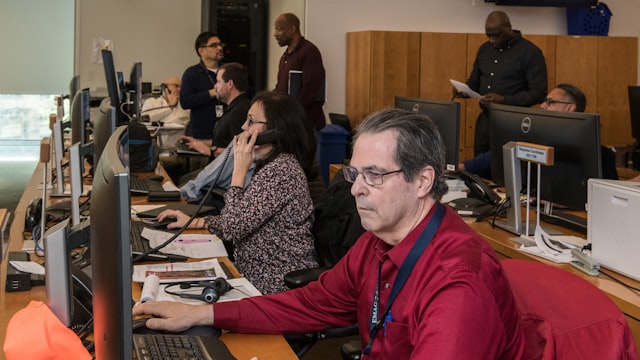
Where AI fits in a Canadian month-end close
The steps in the close that automate cleanly, and the ones that should not.
6 min read

Automating accounts payable approvals without losing control
Where to put the approval gate so speed does not cost you oversight.
5 min read

Bank reconciliation when AI does the first pass
What changes when matching happens daily and only the breaks reach a person.
7 min read
Case study
A manufacturer, from a three-week close to a running one.
A Canadian manufacturer was closing the books deep into the following month, with two people re-keying supplier invoices into Business Central to get there. Within a quarter, coding and matching ran daily and the controller spent month-end reviewing exceptions rather than building the file.
Representative engagement. Figures illustrative.
Why accounting automation matters
The economics of a close that keeps pace with the business.
Daily, not monthly
How often reconciliation runs once the matching pass is automated instead of saved up for the close.
Hours, not headcount
What comes back first: finance capacity returned to the business, without adding a seat to handle growth.
Once, not twice
How often a supplier invoice or bank line gets typed in, once extraction feeds the ledger directly.
Figures are illustrative, drawn from general industry patterns, and not specific to any client engagement.
The cost of waiting
Month-end cost never appears as a line item. It appears as overtime.
Hidden labour cost
Coding, matching and chasing quietly consume finance salary that no one ever budgeted as a project.
Late numbers, late decisions
A close that lands three weeks after month-end is history, not management information you can price or plan on.
A widening gap
Businesses whose ledger is current quote, buy and plan on better information than those still catching up.
Figures are illustrative and directional, not a forecast for any specific organization.
Accounting Learn Hub
Reach a confident AI decision — without having to become the expert.
A working library for owners, controllers and finance managers running an accounting function inside a business that sells something else. We skip the hype and answer the questions that actually move a decision: what to automate first, what it costs, what "good" looks like, and how to keep your accountant and auditor comfortable.
Decide in a week, not a quarter
Short, plain-language answers so you can green-light a use-case with confidence.
Numbers you can take to the board
Benchmarks and cost models that drop straight into a leadership deck.
Get your team fluent
Guides and courses that make non-technical staff comfortable working with AI.
What's inside
Ready to see where your close is losing a week?
A discovery call is 30 minutes. You'll leave with a clearer view of which part of the close automates first.